Creating Memorable Spaces
What is Environmental Art?
In the context of the built environment, environmental art is artwork created or selected in response to the space around it. When it comes to environmental art, architecture matters, as well as the materials, lighting, scale, sightlines, circulation, brand, neighborhood, and people who will experience the space.
Rather than selecting an artwork in isolation and finding somewhere to hang it, an environmental art studio can consider how art interacts with the environment as a whole.
The result might take many forms, such as:
What Is Placemaking?
Placemaking is the process of creating environments that have a recognizable identity and meaningful connection to the people who use them.
For a developer, that means thinking about how people will remember a building as well as how it looks. Where do people gather? What becomes the landmark? How does this space represent a larger neighborhood, organization, history, or community? What will someone photograph or mention to a friend afterward?
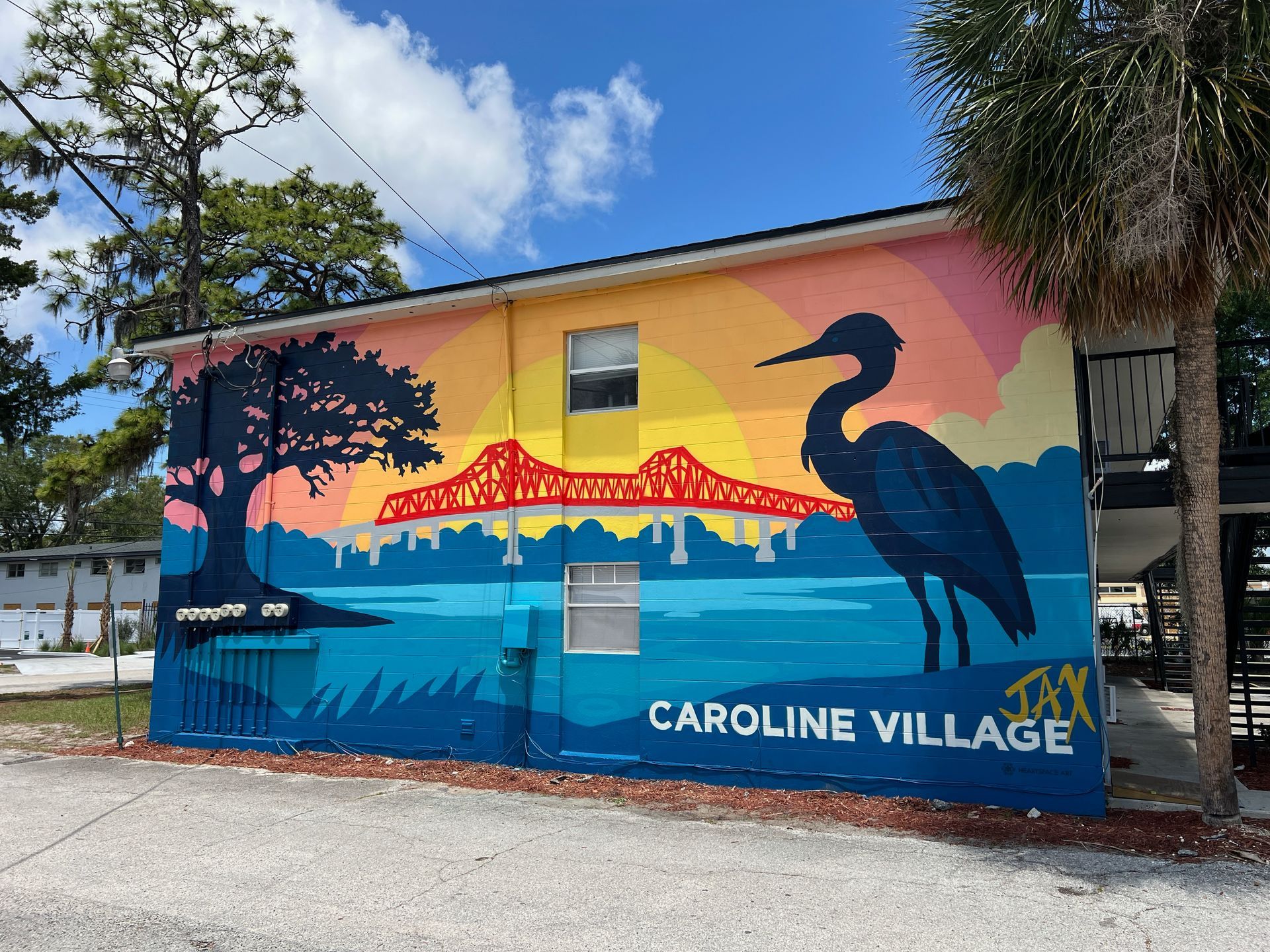
Art creates and strengthens identity. In combination with environmental art, a parking garage can become the gateway to a district, a hospital corridor can feel more human, and a hotel lobby can introduce guests to the culture of its city. A mixed-use development can use environmental art to give visitors a reason to wander, and a restaurant wall can showcase their personality and culture.
What Does a Placemaking or Art Consultant Do?
A placemaking or art consultant helps clients determine where art can create value, what form it should take, and how the idea can be executed.
This is particularly useful on larger projects where artwork may involve multiple locations, artists, mediums, budgets, fabricators, installers, and stakeholders.
Art consultants like Heartspace can help clients move from an open-ended goal to a more defined strategy covering priorities, creative direction, budgets, and installation. Depending on the project, that can include early creative consultation, artist sourcing, commissions, design, fabrication coordination, and project management. Instead of requiring a developer to independently find a muralist, designer, fabricator, installer, or local artists, an art consultant like
Heartspace can serve as a central creative partner.
Working With Architects and Interior Designers
Consultants aren't here to replace the architect or interior designer. Our job is to make their vision easier to carry out. When we join early, artwork can respond to decisions already being made about materials, lighting, finishes, and circulation. A dimensional piece can be planned around architectural lighting and a mural can be designed to respond to the geometry of a building plan.
What We Do
Heartspace has grown from our foundation in murals and site-specific artwork into a broader environmental art and placemaking studio.
Here is what that covers today:
Who We Work With
Developers and property owners come to us for distinctive buildings with stronger identities.
Architects and
interior designers
bring us in to develop and carry out specialized creative elements.
Hospitality groups want hotels, restaurants, and resorts rooted in a sense of place, and
healthcare organizations want thoughtful artwork for patients, visitors, and staff.
Corporate clients use art to communicate culture, municipalities commission work for shared civic spaces, and
general contractors value a creative partner who understands an active construction site.
Why Work With One Partner?
On large projects, the creative process tends to fragment. One muralist paints a feature wall, another vendor prints graphics, a gallery supplies framed work, and a fabricator builds an installation. Each one adds a conversation for the owner or designer to manage, and the pieces don't always feel like they belong to the same place.
We offer one point of contact for the art and placemaking work we're equipped to handle, and we bring in artists, fabricators, printers, and installers as the project requires. Clients get specialized expertise without having to assemble the team themselves, and the art stays cohesive from the first sketch to the final installation.
Creating Places People Remember